Showing posts with label COVID-19. Show all posts

Tuesday, March 1, 2022

Is the Covid-19 Pandemic Over?


Have we reached a turning point in the pandemic?

Nearly every prediction I’ve made throughout this pandemic (it won’t be a big deal, it won’t last long, they’ll never be able to create a vaccine that fast, of course people will get vaccinated, there’s no way they are going to lock us down again, now that we have three shots we won’t get Covid) have been proven completely wrong. It’s been a wily and unpredictable virus. Politicians have made mistakes. Public health officials have made mistakes. Scientists have made mistakes. Pharmaceutical companies have made mistakes. Citizens have made mistakes.

But you know what? I believe that everybody is trying their best. And doing what they think is right.

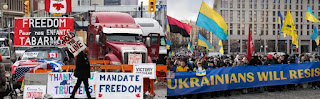
There was recently a rally where truckers and other folks concerned about overreaching government mandates for vaccines, social distancing, masks, and so on, drove into our national capital Ottawa and occupied a large area of downtown near the parliament buildings. It was called the Freedom Convoy and they blocked streets with their trucks and for nearly three weeks took over that part of the city. There was horn blaring, rallies, parties, monument desecration, money raising, food kitchens, sign waving, hot tubs, bouncy castles, calls for Freedom, and undoubtedly a sense of brother/sisterhood, solidarity, and exhilaration with sticking it to the man. Similar groups blocked bridges and roads connecting Canada and the US – key arteries responsible for the transport of billions of dollars’ worth of goods. These protests certainly made a point, but also wreaked havoc on the public, causing a huge amount of distress and problems for the wider population. Many provinces had already released plans to discontinue vaccine and mask mandates and most others were in the process of doing so.

After no less than three levels of government failed to address this problem and clear the protest, (proving our country’s weakness and ineptitude) our leaders finally realized that “The right to swing your arms ends just where the other person’s nose begins” and the prime minister enacted an Emergencies Act which enabled the cops to clear the protest within a couple of days, dragging a few people off to jail, but just mainly sending people home.

The protesters were calling for freedom. Which was ironic to many, as the freedoms we’re given in this country are exactly what enabled them to hold such a protest. Such a thing tried in Russia or China or North Korea would have been met with bullets. That is what a lack of freedom looks like.

Interestingly, just days later, Russian troops invaded Ukraine, starting an unprovoked war. Regular Ukrainian people were asked to take up guns and instructed how to make Molotov cocktails, to support their country and resist the invader. Canada has asked its people to take a vaccine, wear masks, and socially distance to repel our invader. An interesting, and perhaps instructive contrast. What does freedom mean? Are we just a bunch of spoiled, rich brats crying over spilled milk?

After these two events, it feels like things have changed. Mandates are coming down and people have decided to live with Covid-19 and the deaths it will bring. But in Canada, I feel like we’ve all done our jobs. The high vaccination rate here and more extensive restrictions has provided us with only one third of the deaths per capita as compared to the US. We should be proud. Sadly, there has been a cost.

The last two years has created a huge array of problems across the country. Small businesses and some entire industries have been decimated, governments are wallowing in debt, people have become unbelievably lazy, kids have missed school and lost critical years of developing social skills, and the debates over vaccines have broken up families and friendships. It is very hard to say what the longer term impacts of this damage will be, but I am sure it will be studied for many years. But with any bad, comes some good. The proven ability to work remotely will pay grand dividends for years to come in the form of reduced carbon emissions, better work/life balance, more adaptation of technology, and a more efficient allocation of resources. And when we do go to the office or school, the old heroic measure of showing up despite being sick with a cold and coughing all over everybody is thankfully no longer socially acceptable. With the use of masks and social distancing, the flu has been almost completely eradicated for two years – who would have ever thought this possible? Lastly, people learned how to slow down and maybe appreciate the simple things a bit more.

I haven’t been journaling much throughout the pandemic, but I thought it was time to take stock of where I’m at with this; where we’re at with this as a family. In the future, we are going to look back to this time and it will be increasing difficult to remember what it was like, and what we were thinking, and what we were feeling.

When I think back to the HIV/AIDS epidemic, which has now been with us for 40 years and killed 35 million people, I remember being terrified that I was going to contract HIV, despite never being in a high risk group and taking all precautions. At the start there was no treatments or cure so contracting this disease was a death sentence. Information was thin at first and details were patchy, and sometimes wrong, like when it was reported that only gay men could get it. But as more information became available and more experience was gained, the information gained accuracy. Of course, there was media hype but the media back then was limited to television, magazines, and newspapers. And what you read, you assumed, was true; or at least as accurate as they could get at the time with the information they had. But not once do I remember anybody saying to me, “AIDS is fake. It’s not really a disease. Nobody is actually dying from it. The government is just trying to scare you so they can control you more. Don’t worry about condoms, just eat a good diet, stay healthy, and it can’t get you.” And when therapeutic drugs came along I didn’t hear, “People are crazy to take those drugs, they don’t work. The pharma companies created AIDS so they could sell drugs to fix it. Those drugs will make you impotent.” Maybe these things were being said, but I didn’t hear it. Now we have social media, and there’s little need to point out where that has taken us.

Recently, we met up with some people who we love dearly and had decided against taking the Covid vaccine. Because of this, things have been frosty over the past two years, our get togethers infrequent, and our conversations shallow. It felt like we were never going to be able to have a conversation of substance ever again. How could they be one of “those” people? Didn’t they care about protecting the elderly, weak, and those that were medically unable to take the vaccine? Didn’t they want this to be over? Weren’t they scared by the potential consequences of getting Covid? Why couldn’t they just take the miniscule risk of taking the vaccine just like the rest of us had done? Had they turned into these people who haven’t picked up a book in twenty years, but in the past two years have somehow become virology experts, authorities on health policy, and investigative super sleuths?

We had it out. For 13 hours we stood, sat, leaned, paced, trembled, and raged in our kitchen. We held nothing back. Uncomfortable questions were asked. Accusations were made. Beliefs were challenged. There was face to face screaming, and I mean literally nose to nose. It was glorious. It was therapeutic. But mostly, it was a relief. The night ended (and was interrupted many times) with hugs and kisses. Throughout, we respected each other’s opinions and the challenges came from all sides. It wasn’t always “us against them”. Sometimes it was “us against us” and “them against them” – a sign of a rousing, productive argument.

Here is my belief after hearing all the arguments from what I’ll call the other side for lack of a better term. It is simply about trust. Some of us trust what our governments and health officials have been telling us and we’ve acted accordingly. Some of us do not trust them and have searched out alternate sources of information on which to base our decisions. But when we cannot agree on basic facts, it hurts our democracy and makes it nearly impossible to communicate to each other. This is where we have been the past two years – the majority of the population living in one reality and a minority living in another. Neither of these groups is smarter than the other, or has better access to information, or has better reasons for doing what they are doing. It’s about trust.

In the end, nobody knows the truth and nobody ever will. So let’s not pretend that we can. But we do need to decide how we want to live our lives. Do I want to believe everything the government tells me is a lie because they are trying to control me? Do I reject everything doctors and scientists tell me because they are being paid off by the pharmaceutical companies? Do I refuse to trust all major media sources because they are “in on it”? Do I want to look upon every government statistic with contempt, assuming it is all lies? No. I don’t what to live like that. I can’t live like that. It would turn me into a person that I don’t want to be - distrusting, suspicious, paranoid. But I do need to decide what my reality is. And my reality is this. I believe that democracies are good, but flawed, and fragile, and need to be vigorously defended otherwise they crumble. I believe that democratically elected governments are better than autocratic ones because they are held accountable. I believe that people act primarily in their own self-interest, which means some become corrupt and abuse their power, but I also believe that the vast majority of people feel a sense of responsibility to others and usually try to do the right thing. I believe that people crave certainty, but there is precious little of this in life. Finally, in this age, with a camera and recorder in every pocket, surveillance cameras on every house, a pervasive internet, and an activated public, it is impossible to keep a secret.

At the end of our 13 hour discussion, nobody changed their minds about much. But we all felt heard. And that was something that was long overdue. This is why I feel we are at a turning point. People have been heard. The unvaccinated have been punished for long enough. The vaccinated have done what’s been asked of them. Many thousands of lives have been saved because of Canadians’ efforts in getting vaccinated and masking but we also must admit that the vaccines have not delivered what the government and health officials promised. We are all getting Covid now despite our vaccination status and we are going to have to live with that.

It’s time to move past this and get started on repairing all the damage. Mending our social connections. Going out again and supporting local businesses. Shutting off the goddamn television and putting down the toxic phones. Seeing peoples’ faces again and being happy instead of scared. Letting our kids be kids. And if (when) another more dangerous Covid strain comes along, will the people demand we handle it differently?

We have a lot of work to do. Somebody said getting out of this pandemic is going to be harder than living through it.

Let’s hope not.


Wednesday, July 22, 2020

The 2020 Sailing Trip Begins


By 5:30 pm we were cruising westward down the 403 highway with Subway sandwiches in hand heading to join Bella Blue in Sarnia - the kick off point for our four week sailing trip to the North Channel and Georgian Bay regions of Lake Huron. We were supposed to be going the other direction towards Pearson airport for a flight to Kuala Lumpur, Malaysia this very evening, but 2020 hasn’t turned out quite the way we expected it to. As Magnus said a few weeks ago, 2020 is the year of abandoned plans. But in the wake of abandoned plans, new plans are hatched, and we find a different way to carry on - and our way is sailing.

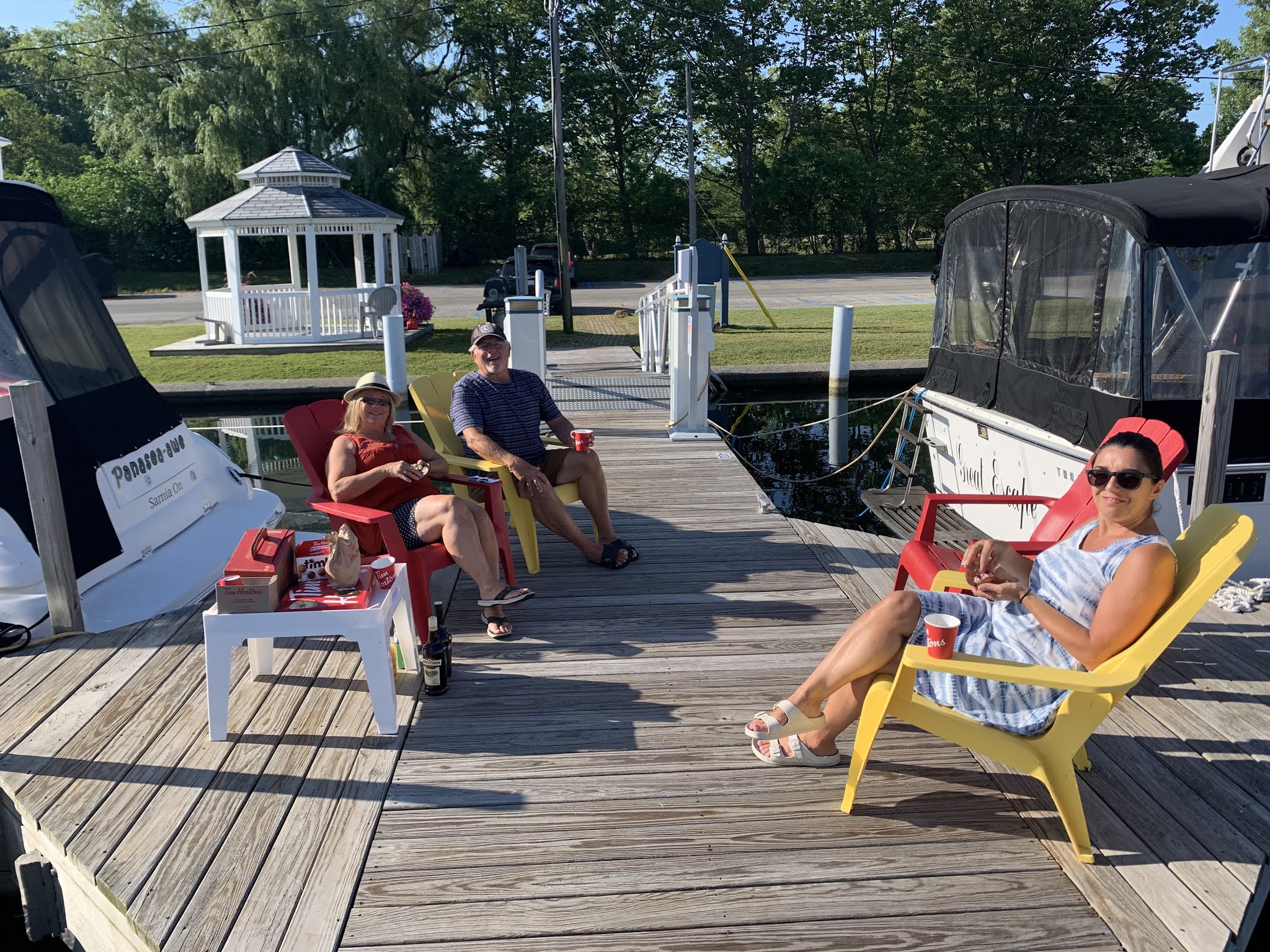
We arrive in Sarnia and are greeted by the Bridgeview Marina dock 400 welcoming committee Rick and Patty Kingswood, our old friends from years back when we spent an entire season docked here, and spent many a late evening around a fire with them solving all the problems of the world. We are overjoyed to see them again and they are astounded to see how much our kids have grown.

We immediately get to work on prepping the boat, and one of these jobs is installing the new portable air conditioner unit Ana just bought yesterday. Our onboard a/c unit was giving us some problems and simply stopped working last weekend so we spent all week trying to find replacement parts or a replacement unit, but due to the COVID situation, the Canadian supply had been cut down to nothing and the thought of spending 30 degree days in marinas being slow cooked like pork loins in our boat was unbearable. Ana struggled to even find a portable unit, but she prevailed with a beefy 12,000 BTU Danby model (henceforth to be known as crew member “Dan”), but we had no idea if it was going to fit or how exactly we were going to install it. After 30 minutes Magnus and I had built a venting hatch and we had Dan installed and blowing freezing air into the smoking hot cabin. Incredibly, the unit fit in perfectly, almost like the damn thing was custom built and it became so cold in the boat that we were thinking of hanging up prosciuttos, stocking up on German salamis, pickles, and fancy cheeses and opening “Ana’s Floating Deli”.


While Ana was packing unimaginable quantities of food and drinks into the nooks and crannies of the boat I was squashed into the rear cabin doing advanced yoga moves to access the still leaking primary fuel filter in the engine compartment (see last blog for details on this one). You know, when you look at boats for sale listings, the one photo they never show you is the heroic bodily contortions required to access the engine compartment. Ask any sailboater if they can touch their toes and they will bend over, grab their ankles, then reach all the way back up and give themselves an ass massage with one hand while using the other hand to replace the 1/2" bit on the socket wrench they are holding to a 9/16”.

At the end of my repairs I was left with fuel soaked hands and a aluminum collection cup of diesel I wanted to put back into the tank, so I asked Magnus to grab the engine key, which also holds a little device used to unscrew the cap from the diesel tank, and open up the tank inlet for me, which is located at the stern of the boat. He grabbed the key and began wrestling with the cap, but it was stuck on tight and he couldn’t get it. All important boat things that cannot be lost will be attached to a floating device, but the one attached to the engine key was very old and as far as I knew had never been tested for successful buoyancy. So I said to Magnus, “Be super careful you don’t drop that key because it might not float. If we lose that key we are screwed because I don’t have a spare.” Now a good captain would have stopped the operation right there and tied a string onto it, or attached an extra floatie, or implemented some other sort of failsafe, but I left it in his capable hands. And seconds later those capable hands slipped and the engine key plopped into the water and slowly began its decent down, down, down into the depths.

“Aaaaaggggghhhh!!!!” Magnus screamed and leaped over to the dock, fell to his belly and started clutching at the water, but it was too late - the key was gone. I looked at him sternly, but kept cool and didn’t say anything. Poor Magnus had gone white, no doubt thinking he had just ruined the trip for everybody and had a panicked and sick look on his face. I told him, “Don’t worry buddy, we’ll get it,” and I knew we’d get it because I’d seen this movie before. Years ago when my dad and brothers helped me sail Bella Blue to Sarnia, my dad dropped his phone into the water and I was able to retrieve it so I knew it was a sandy bottom and the water here is crystal clear. So I put on a mask, donned the fins, jumped in, swam right to the bottom and in12 feet of water was my engine key in the sand with the flimsy floatie standing erect, yearning to return to the surface. I grabbed the key, launched myself to the surface, and was met with a chorus of cheering and applause from my children. My reputation as the village diver remains intact.


We didn’t finish our boat jobs until after 11, so were finally able to join Patty and Rick for a visit, and we had a lovely time catching up on several years' worth of news. Earlier this week Ana had suggested we consider leaving the boat in Sarnia for the winter and spending next season there, which would save us the long haul back to Port Dover at the end of our trip, but also give us another chance to further explore Lake Huron. After our visit with our buds, we were decided. And we knew our Port Dover buddies were used to us coming and going every few years. Ana was full of ideas this week, and she came up with another big idea that could potentially change things a lot. But I’ll get back to that one later.

We returned to the boat well after midnight and Ana and I spent another hour flushing out the engine compartment and bilge with fresh water, then collapsed into bed, looking forward to what just may be our last good sleep for a few days.

Wednesday, June 24, 2020

How’s the COVID going, eh?


I am going to look back on this blog in ten years and wonder, “Why wasn’t I writing more about COVID and what it was like? It was quite a big deal.” I often look back at old blogs, thinking I’ll find my viewpoint or commentary on something important that happened in the past, but usually I don’t find anything. So this is a note directed to Future Kris. I don’t usually worry too much about Future Kris, in fact I can be downright mean to him sometimes. Like when there’s something important I need to do, but it doesn’t have to be done for several months, I will say, “Stuff that. I really don’t feel like doing it now – Future Kris will take care of it.” And he does. And hardly complains. But he can’t really, can he? Because Future Kris always turns into Present Kris, and then Present Kris wonders what the hell Past Kris was thinking when he procrastinated for so long. So Past Kris takes the blame, but Present Kris always has to clean up the shit, unless he manages to sluff it off to Future Kris again. It’s a vicious, but rather predictable cycle.

My last day of work in the office was March 16 which was over three months ago. Since then our world has completely changed – far more than during any of the previous Black Swans, such as the 911 attacks or the Great Recession. I have been working from home every day since then, as has Ana, and the kids have been learning remotely. We only go into shops when absolutely necessary and always wear masks. We don't have friends over. We haven't been able to hug our nieces or Ana's folks. When we watch tv, it seems unnatural seeing scenes with big crowds, or people at dinner parties, or bunches of kids hanging out together. We haven't been into a bar or restaurant. And we've explored every inch of ground for miles around during our lunchtime and evening walks. Nearly all of our time is spent at home.

And yet, we adjusted quickly and I must say that we have done well as a family and quite enjoyed the time together, minus the odd battle over personal space, computer access, cooking duties and that sort of thing. Stella has been laser-focused on her school work and has probably put in twice as much effort as she would have normally, to the point of it actually becoming a problem at times. But we are very proud of her dedication and unstoppable work ethic. Magnus has done the amount of school work required to get the grades he wants, and has devoted the rest of his time to developing new hobbies, in particular wood-working and knife-making. We have been so impressed with what he has done, and if it weren’t for the pandemic, he never would have developed these skills.

What are the long term consequences of this pandemic? I don’t know. I’d like to hope that we have a new appreciation for the simple things, and don’t feel the need to be constantly on the go, or out buying stuff, or otherwise racking up unnecessary miles. I hope we have rediscovered what it is like to live in a free country like Canada, where we can go where we want, see who we want, and do whatever we want at all times, because we’ve lived without these luxuries for the past three months. Set against the backdrop of COVID has been the Black Lives Matter movement and the worldwide protests against the systemic racism which exists everywhere, which has made us more aware of this serious issue and compelled us to analyze our own behaviors. Seeing how the pandemic has unfairly brought the majority of the damage to non-white, economically disadvantaged people, but also how most governments have stepped in to financially support their citizens has certainly brought some lessons too. Lastly, the environment. We’ve given the Earth a little break. Not much, but a little. I hope that people took notice of what it is like to live with less air pollution, less planes overhead, less traffic, and have reconnected with nature through the long walks that nearly everybody I know has been taking.

To me, this time has been a gift, and one that we may never see again in our lifetimes. Or maybe we will experience it regularly, nobody knows. But I for one am hoping that things never go back to “normal”, because this pandemic has shown us there are better ways to do things and that societies can change quickly and efficiently when it becomes necessary. And change is necessary. I hope we remember that as we begin the slow process of re-opening society.

Stella came up with this strange game the other day as we were all out for hike on one of the nature trails near home. She said, “I’ll name an animal and you guys have to say what it represents in the world.” She named off a few animals and we answered – the cardinal represented freedom, the bee represented how we’re doing things that would have seemed impossible before, and so on. Then she mentioned chipmunks. This year there have been chipmunks everywhere – dozens of them running around everywhere you look. Ana’s research told us it was because of the mild winters and the resulting abundance of acorns that chipmunks thrive on. So Stella says, “What do chipmunks represent?”

Magnus says, “Abandoned plans.”

He was spot on. Our own family’s abandoned plans include a four week trip to Malaysia, Borneo, and Bali which we have been planning for over a year. And because of the popularity of Borneo and Bali at this time of year, we were forced to book nearly all of our hotels and flights in advance, something we never do on these trips as we prefer spontaneity and to book as we go. So Ana’s been battling with the airlines and hotels to get refunds and the battle continues, but if anybody can do it, she can.

We weren’t going to let our four weeks of vacation go to waste, so we decided to instead put the sailboat in the water this year and do a trip up to Georgian Bay and the North Channel of Lake Huron. We’ve spend the past few weekends working on the boat, getting it all ready for the trip, and Magnus and I just put her in the water today. This will be the longest sailing trip we’ve ever done so we are both giddy with anticipation but also a little apprehensive over the required long sailing days and nights we will need to do. I’ve recruited my brother Marty and cousin-in-law Adam to help me sail her from Port Dover to Sarnia as the first leg of the journey, then the family and I will leave the following weekend for the full trip. Our favourite traveling companions, the Henriques, will be meeting up with us along the way, and we are looking forward to many exciting days on the water. If you are not a boater you probably don’t know that the word “exciting” is actually a code word for “boat disaster”, because you know one or both boats are going to break down, but you just don’t know what the exact breakdown will be, how much the repairs will cost, or how badly it will screw up the trip. That’s the exciting part!

This trip will give us a chance to forget about Covid-19 for a little while, ignore the media-revved stupidity and chaos coming from our neighbours from the south, take a break from work, and spend some quality time together as a family. HA! As if we haven’t been doing enough of that lately, but now we’re going to jam all that family love into 150 square feet of claustrophobic boat space with kids who are physically twice the size as they were the last time we did this. We are always up for a challenge.

Saturday, April 4, 2020

Is There a Bright Side to the COVID-19 Pandemic?


Risk. Uncertainty. Fear. Panic. Welcome to 2020.

We are in the midst of the COVID19 global pandemic and at times like these, it is natural to re-evaluate one’s life and world view. The fear of this virus has become overpowering and unavoidable. There is literally nothing else being reported on in the mass media, stoking even more fear and desperation. Governments are executing massive stimulus programs, sending bucketloads of money out the door to people who have lost their jobs (and there are many), parents, seniors, but also large and small businesses across the country. Governments at all levels have sent us home into quarantine and closed schools, daycares, most businesses, parks, playgrounds, and restricted all social gatherings. Though few of us have experienced wartime outside of Hollywood epics, that’s what it feels like right now (without all the shooting). To make things worse for Canada and other resource extracting countries, the price of oil has dropped to below $20/barrel due to a supply war between Saudi Arabia and Russia, devastating the entire industry. The price is closing in on lows set in 1998 – over 20 years ago, and they hadn’t previously hit that level since 1947.

People are dying from this and more people are going to die. Many more will lose their jobs, houses, and other possessions as they start liquidating assets to bring in cash to spend on the necessities. Some of these people will crack under the pressure and commit suicide. Relationships will fall apart. Mental health issues will skyrocket. Many will give up hope. All of this is awful.

There is going to be plenty of carnage to go around. But one thing to remember is that when chaos reigns, opportunities abound…if you look for them. Many people plant seeds for future wealth during times of uncertainty. They are greedy when others are fearful. They take chances when others are running for the exit. Governments too have made their greatest and most significant changes during bad times, and the effects of these last for decades or longer. Let’s take a break from the doom and gloom and look for some opportunities.

1. Deal with climate change

Look at the world pulling together to combat an imminent threat. It is truly amazing what we can do in times of emergency. But it seems that this Herculean effort is only possible when the fear of death or total collapse is present. We are slowly roasting our planet by unnecessarily burning fossil fuels and we need to stop doing it, otherwise millions of deaths will be caused and our way of life will truly change for the worse, and impact the poorest of humankind the most. Let’s find a way to extend this spirit of global cooperation to seriously tackling climate change. Like Greta Thunberg recently said, “I want you to act as you would in a crisis. I want you to act as if our house is on fire. Because it is.”

Maybe this virus is part of the Earth’s plan. I imagine the conversation going like this:

Earth: Could you please stop burning all my energy resources, it is really causing a lot of problems and making it tough for me to hold the whole system together.

Us: Fuck you.

Earth: Ok then, if you are not going to do anything about it, then I will. And you’re not going to like my solution.

Has it occurred to anybody that there could be another virus that pops up right after this one, but maybe it will kill 50% of the people who contract it and will be more contagious than the coronavirus? Maybe the combined problems of human overpopulation and warming temperatures are causing ever more deadly viruses to occur ever more frequently. Nature is all about balance, nature is complex, nature works in mysterious ways. We ignore her at our peril.

2. Improve the school system

In Canada we claim to have a world class school system, and judging by international standards, it is good, but could absolutely be improved. Is the money we are putting into the education system delivering the anticipated results? Canada's ranking in global comparisons of education systems has slipped in recent years, and this is not for lack of funding. Perhaps we've reached the point where incremental changes are no longer improving results. The recent strikes in Ontario have been difficult to the public to understand as the unions, who wield an enormous amount of political power, pushed for increased pay and benefits, and pushed back on some progressive reforms such as online learning and higher class sizes for high school students both of which seemed like rather tolerable changes to get the overall cost of delivering education under control, but which would have resulted in fewer teacher positions, despite the government's guarantees that these position cuts would be delivered through attrition and not job losses. As a result, teachers across all systems went on strike, resulting in lost school days, terrible disruption for parents, and disappointed kids. In the end, it seems the unions came out ahead, as most of the proposed changes were tossed and yearly benefits will be increased by 4% while pay will be held to 1%.

Our provincial government is facing major spending challenges as the provincial debt and deficits have exploded in the past fifteen years. Cuts must be made and systems need to become more efficient. How can we educate children to become productive, innovative, creative citizens but at a lower cost? As we are seeing during this crisis, health trumps everything else and the bill is going to be massive, which will give the government much less room for future compensation increases for public sector employees.

Governments should take advantage of this time to reset the rules. First, in a time where people everywhere are losing their jobs, losing their businesses, and losing their minds, teachers and many other public sector workers (me included) are effectively sheltered from all of it. It is time to reset expectations. Public sector salaries and benefits cannot continually rise when private ones get decimated during the inevitable crisis times. Paying public sector workers more than similar private sector jobs and offering incredible pensions that go far beyond anything in the private sector does not make sense and it is not fair to taxpayers.

Deep structural changes such as consolidating the four different types of school boards, implementing accountability systems that affect pay for unionized workers, or somehow reducing the political power of the unions are tough, if not downright impossible. But this is a perfect opportunity to embrace the idea of using technology to enable remote or online learning. If teachers and students can effectively learn remotely, then whenever the physical schools are closed because of bad weather or a crisis, we can switch to the online model and keep the system running. And we can continue to develop the idea from here for the benefit of students. This seems like something that everybody should be able to agree on.

3. Get government spending under control

This is all so predictable that it’s almost laughable. Over the past ten years, Canada has been going through nearly uninterrupted boom times. Yet all levels of government run massive deficits every year. It’s in the name of “investment”. Or to solve burning social issues. Or to keep us competitive. There is always a reason. But the fact is that during the good times governments should not be overspending because the next disaster where massive stimulus spending will be needed, is always right around the corner. Doesn’t a crisis tend to happen every ten years or so? Why do we think these won’t continue to happen? Permanent deficits are bad policy and an awful example to regular citizens who simply follow their lead and spend money they don’t have on things they don’t need.

The aftermath of this crisis will be massive levels of government debt, which means taxes will rise and future spending will be cut. At least the math would suggest this is what should happen, but in these times, we can’t count on any governments to spend and tax responsibly, because we keep electing ones that don’t.

4. Let kids learn in a different way

I’m not going to lie. I have really been enjoying this time. I realize we are very fortunate in that my job seems to be secure, and really hasn’t changed much at all, besides working from home 100%. Ana’s job is safe for now, so we still have money coming in. I know many are not in this enviable situation, so it is good to see governments stepping up to help get people through, because people really need help right now.

This time of the four of us at home, together, has created a huge opportunity to experiment with learning. When the schools closed, Ana and I put together a plan for the kids. It was simple. They must spend 4 hours per day learning new things. So we created a list of interesting topics, ideas and activities. Here are a few of them:

- learn calligraphy
- practice wood carving
- learn touch typing
- develop a carbon reduction plan for the family
- learn how to cut up a whole chicken and how to fillet a fish
- learn to sew
- make bread and do baking
- research what the Koran is and why is it important
- what is the Big Bang?
- use Lynda.com, khanacademy.org, or any of the thousands of self-directed learning websites

The kids can choose any of these, or come up with their own, but the idea is to use this incredible and probably once-in-a-lifetime gift of time to explore things they are interested in. No teacher telling them what to do, no deadlines, no pressure, and no test. Deliverables from their day’s activities are discussed during dinner and if they have put a presentation together, they deliver it after dinner in the family room, and then we discuss it together.

Are we the kind of people who could do home schooling? I don’t think so. But this time has given Ana and I an incredible chance to explore this style of learning with our kids. And it has been working out very well. The kids have embraced the system and are probably doing more than the 4 hours each day as they are enjoying the things they are working on. They are also allowed to choose their own times. Stella loves to stay up late and sleep in, so she has been doing just that and starting her work day at 10 or 10:30. Magnus sometimes sleeps in, and sometimes is up at 6, so we have put them in control of their time and their learning.

5. Take a break from Consumerism

We buy stuff all the time. It seems that nearly every day we carry something into this house. Something we bought somewhere. I know because I track every dime of our spending and review every receipt, and by the end of the year I have a box absolutely crammed with these scruffs of paper, which I look at and think what the hell was all this stuff?? Well, we’re certainly having a nice break from that. We have bought nothing else besides food for the past two weeks and it has been beautiful. Actually, that’s not quite true – Ana and Magnus went to the Dollar Store yesterday and bought scrubbie pads for doing dishes, some new steak knives, and a few other bits and pieces. I know we needed some of it, but I think it was really more like a pressure relief valve for all the pent up “retail constraint” that has been steadily building. I don’t know. I usually play the bad guy and complain whenever a new bag of stuff comes through the door (thankfully, the things we bring home are usually used and from Value Village, thrift stores, garage sales, etc.) but I do realize we need things to live and I passionately hate shopping so it’s probably better if I keep my mouth shut and just purge things from the house when nobody is looking.

6. Reconsider the use of a rainy day fund

Financial experts used to recommend having 6 – 12 months’ worth of living expenses in savings available in case of an emergency. I think they eventually quit saying it because nobody listened. And in these days of instant and accessible credit, it is quite easy to get money if you need it – from a home equity line of credit, from a credit card, or from a bank loan. At least it is in normal times. When crisis happen, credit often dries up. Back in 2009, the banks effectively stopped lending. This was not kickstarted until the government stepped in and provides massive injections of money and guarantees. The same thing has not yet happened during this crisis, so credit remains available, but there’s a catch: many bank branches are closed, hours are limited, and the telephone lines are overwhelmed with calls so it is virtually impossible to speak with your bank. This means that if you run out of money, and max out your plastic, you might be calling the Bank of Mom and Dad.

Having a nice buffer of savings gives you piece of mind that you can ride out the storms that inevitably occur. Plus, and I hesitate to say this, but these crises usually present some incredible deals on “toys” when people living on the financial edge are forced to start liquidating. In the coming months you will be able to scoop up snowmobiles, atvs, side-by-sides, boats, cars, and trailers at great prices…if you have cash.

7. Transform the working world

Remote working has been with us for a long time, but primarily in select industries or occupations, such as call centres and consulting. Now, we are pushing the boundaries of this and if you have the sort of job that is possible to do remotely, then you likely are. This working model has many advantages that extend far beyond the workplace. First, commuting. Driving to and from work every day produces carbon emissions, wastes time, and exposes both drivers and pedestrians to injury and death from traffic accidents. Commuting requires us to have more and bigger roads, more traffic control systems, more emergency services, more road maintenance equipment. And it causes more localized pollution. These are costs and deaths that could be avoided, and I can’t wait to see the studies that come after this crisis showing how many lives were saved due to fewer traffic accidents.

Second, effective time management. My normal working hours are 8:30 to 4:30, a paltry 7 hours per day making me one of the lucky ones in the public sector. My day is filled with meetings, impromptu hallway conversations, phone calls, and all the regular stuff you find in an office environment. Now, I have been starting at 6am, which gives me over two hours to focus on the tasks that require quiet and concentration without disruption. Then I do my online meetings and calls throughout the day, but I take a much longer lunch to spend time with the kids, go for a walk, play some guitar, or do some writing. Then I get back to work for the afternoon with a clear head. Structuring the day this way has increased the quality and quantity of my output.

Third, having the infrastructure to support remote working makes an organization much more resilient. Being able to rapidly switch to this model in times of crisis reduces downtime and will result in a much better service to the public. This time it’s a virus, but next time it could be a weather disaster, a chemical spill, a bomb threat, or a building failure. Instead of being fragile, let’s be antifragile.

Now do I think that we should all work from home all the time? Absolutely not. But I think we could adjust schedules to allow people to work from home on certain, coordinated days of the week. For example, all meetings happen on Mondays, Wednesdays, and Fridays. People in appropriate jobs can work from home Tuesdays and Thursdays. This would allow employees to schedule the tasks that required focus during the home times. Let’s face it, meetings should and do result in action items, and if you have an endless stream of meetings, there’s no time left to do the damn work!


So there you have it – a few ideas to make the most of these troubling times. I strive to be optimistic, and it’s tough when the world seems to be falling apart. But I try to remember that crises will always happen, and they will always end. And though it can be hard to see at the time, some good outcomes will always come out of difficult events.